Collection: Tray Sealing Machine with MAP | Modified Atmosphere Food Tray Sealer
About Tray Sealing Machine with MAP | Modified Atmosphere Food Tray Sealer
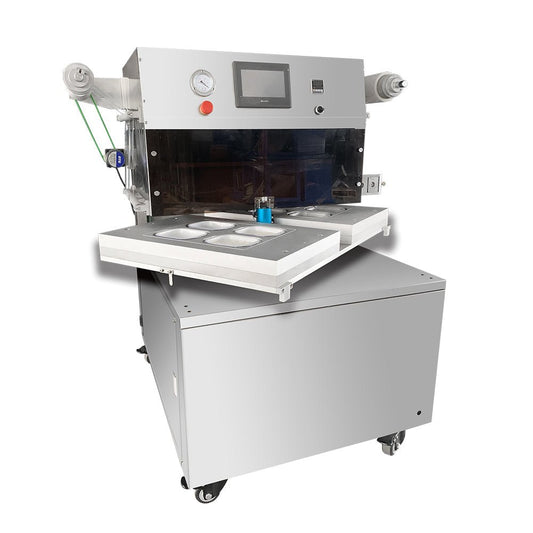
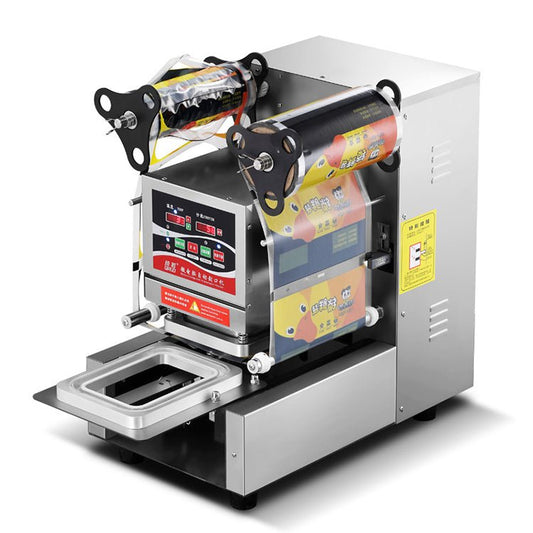
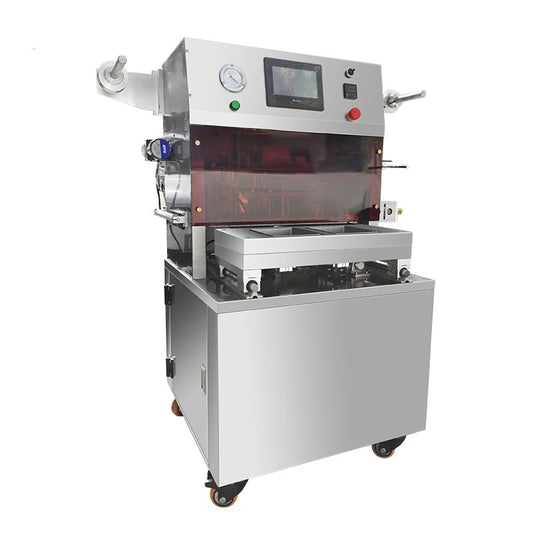
A tray sealing machine heat-seals a top film onto pre-formed trays to create an airtight pack, and with MAP (modified atmosphere packaging) it first evacuates air and flushes a protective gas mix. CO₂ inhibits bacteria, N₂ prevents collapse and O₂ keeps fresh red meat colored. It is used for fresh meat, seafood, ready meals, produce, bakery and deli, typically built in food-grade 304 stainless steel with PLC control.
How to Choose
- Tray size and material: PET, PP, CPET or EVOH barrier trays in the dimensions you run
- Sealing mode: standard seal, vacuum, or MAP gas-flush depending on shelf-life goals
- Gas mixing accuracy: replacement rate and CO₂/N₂/O₂ blending precision for consistent preservation
- Automation and output: semi-automatic with interchangeable molds vs fully automatic trays-per-minute lines
- Product type and hygiene: meat (needs O₂), seafood, ready meals or produce, plus 304 SS cleanability for food safety
FAQ
Q: What is MAP tray sealing?
A: The machine removes air from the tray, injects a controlled gas mixture (CO₂, N₂, O₂), then heat-seals a barrier film to slow spoilage and extend shelf life.
Q: Which gas mix is used for fresh meat?
A: A small amount of O₂ keeps red meat looking fresh, CO₂ inhibits bacteria, and N₂ fills the remaining space to stop the pack collapsing.
Q: Tray sealing versus vacuum packaging—what is the difference?
A: Vacuum packaging compresses the product after air removal, while tray sealing keeps the product's shape using protective gas inside the tray.
Q: How much can MAP extend shelf life?
A: Compared with ordinary packaging, MAP typically extends the shelf life of fresh food by several times, depending on the product and gas ratio.