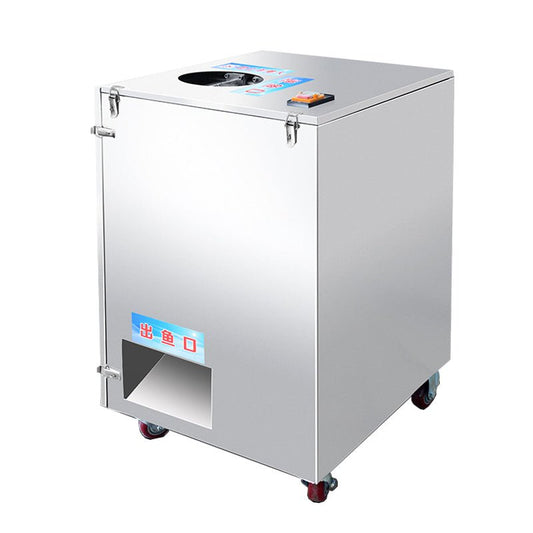
Collection: Commercial Seafood Processing Equipment | Fish Processing Machines
About Commercial Seafood Processing Equipment | Fish Processing Machines
Commercial seafood processing equipment automates the steps between landing and packing fish: descaling, gutting, head and tail cutting, filleting, skinning and deboning. These machines reduce reliance on skilled manual labor and keep output consistent for fish factories, seafood plants, wholesalers and processing workshops. Machines are built from food-grade stainless steel to resist saltwater corrosion and frequent washdowns. Model choice depends on the fish species you process and your target throughput.
How to Choose
- Throughput in fish per hour — size the machine to your daily landed volume
- Species compatibility — different machines suit round fish, flatfish and specific size ranges
- Construction material — 304 or 316 stainless steel for saltwater and washdown hygiene
- Function set — scaling, gutting, filleting, skinning or a combined multi-function unit
- Cleaning and maintenance access — easy access to blades, belts and drives for routine service
FAQ
Q: What stages of processing can seafood equipment automate?
A: Typical machines cover descaling, gutting, head and tail removal, filleting, skinning, deboning and portion cutting. A full line can run from whole fish to retail-ready fillets.
Q: How do I choose between a single machine and a full line?
A: Small operators often start with a multi-function unit that scales, guts and washes. High-volume plants combine dedicated filleting, skinning and packing machines into a continuous line.
Q: Why is stainless steel so important in seafood machinery?
A: Saltwater and repeated washdowns corrode ordinary steel. Food-grade 304 or 316 stainless steel resists rust and supports hygiene compliance in seafood processing.
Q: Can one machine handle different fish species?
A: Some scaling and skinning machines accept several species with adjustable settings, while filleting machines are often tuned to specific size ranges. Confirm the species and size with the supplier.