Collection: Cartoning Machine (Automatic Horizontal & Vertical Cartoner)
About Cartoning Machine (Automatic Horizontal & Vertical Cartoner)
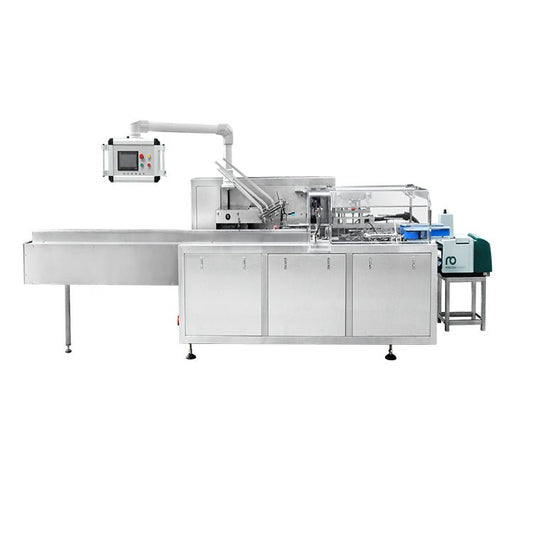
A cartoning machine erects cartons, inserts products (bottles, blisters, sachets, pouches, tubes or ampoules) and a leaflet, then closes the carton by tuck-in or hot-melt glue for pharmaceutical, food, cosmetic and consumer goods lines. It runs in intermittent motion (up to about 100 to 160 cartons per minute) for multi-SKU plants or continuous motion (150 plus per minute) for long single-format runs. Key variables are carton size envelope, leaflet folding, infeed type and pharma-grade documentation.
How to Choose
- Motion type - intermittent for flexible multi-SKU changeovers, continuous for high-speed single-format runs.
- Carton size envelope - verify length, width and height range and board weight (e.g. 250 to 350 g per square meter) cover your smallest and largest cartons.
- Closure style - tuck-in (reversible, pharma or cosmetic standard) versus hot-melt glue (tamper-evident, faster).
- Leaflet insertion - confirm folding (1 to 4 folds), size range and missing-insert detection if required.
- Product infeed - match feeder to bottles, blisters, sachets, tubes or pouches, and check pharma compliance (cGMP, IQ or OQ).
FAQ
Q: What is the difference between intermittent and continuous motion cartoners?
A: Intermittent cartoners index and stop for insertion (flexible, up to about 100 to 160 cpm, easy changeover); continuous cartoners run nonstop (150 plus cpm) for dedicated high-volume lines.
Q: Can a cartoning machine insert a leaflet with the product?
A: Yes, most automatic cartoners include a leaflet folder and inserter with presence detection and auto-reject for missing inserts, essential for pharma packs.
Q: What carton sizes can a cartoner handle?
A: Each machine has a fixed size envelope; you must match your carton's length, width, height and board weight to the published range - cartons outside it will not run economically.
Q: Which closure is better, tuck-in or hot-melt glue?
A: Tuck-in is reversible and standard for pharma and cosmetics; hot-melt glue gives tamper evidence and supports higher speeds but adds a glue unit and cost.