Collection: Commercial 4-Door Refrigerator & Freezer | Stainless Steel Reach-In Cabinet

About Commercial 4-Door Refrigerator & Freezer | Stainless Steel Reach-In Cabinet

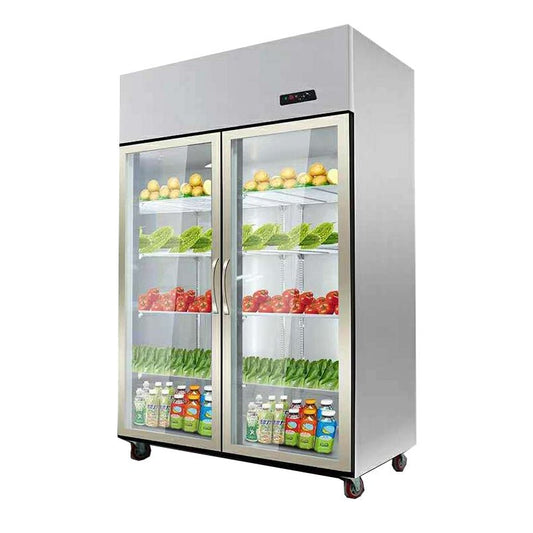
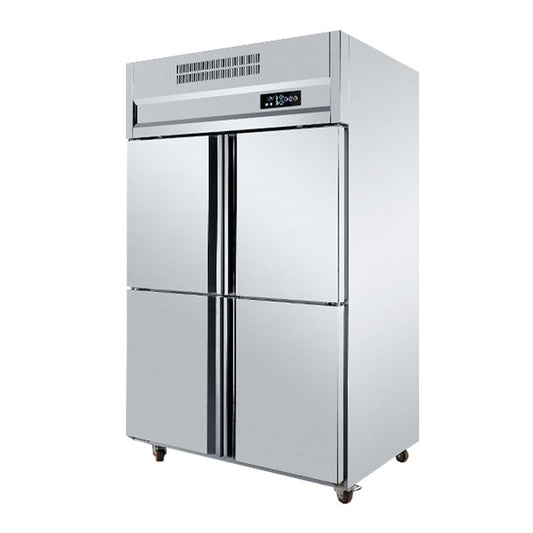
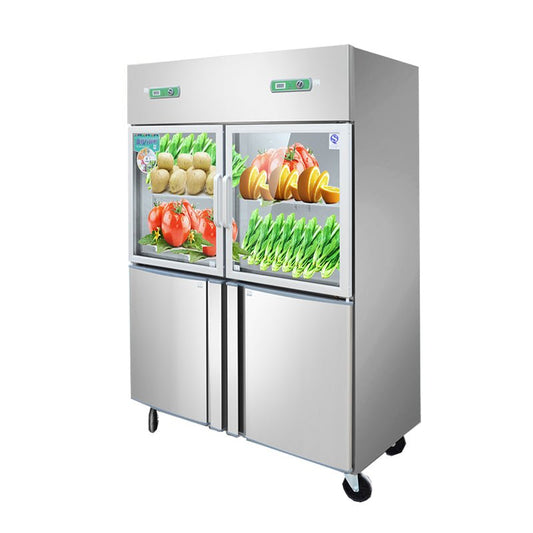
A commercial four-door refrigerator or freezer is a large stainless steel reach-in cabinet used to store ingredients, prepared dishes and packaged goods in restaurants, hotels, bakeries and supermarkets. Units may be full refrigeration, full freezing or dual-temperature, with independent temperature zones for different products. Air-cooled systems, adjustable shelves, self-closing doors and casters are typical features that support busy kitchen workflows. Choose based on total capacity, temperature range and the layout of your kitchen.

How to Choose

  • Total capacity in liters — size the cabinet to your daily storage volume
  • Temperature configuration — refrigeration, freezing or dual-temperature zones
  • Temperature range and digital control for stable product storage
  • Stainless steel construction and thick insulation for durability and efficiency
  • Accessories — adjustable shelves, casters, self-closing doors and interior lighting

FAQ

Q: What is the difference between a four-door refrigerator and a four-door freezer?
A: A refrigerator cabinet holds chilled products around 0 to 10 degrees Celsius, while a freezer stores products below freezing, typically around -18 to -22 degrees Celsius. Dual-temperature models combine both in one cabinet.

Q: What capacity do I need for a restaurant kitchen?
A: Estimate your daily storage volume, including ingredients and prepared items, and select a cabinet with usable capacity above that figure. Common commercial four-door units range from about 800 to 1300 liters.

Q: What refrigerant should the unit use?
A: Many modern commercial cabinets use R290 or R600a hydrocarbon refrigerant, which is efficient and has a lower environmental impact. Confirm compatibility with local regulations and gas standards.

Q: Do four-door cabinets need special installation?
A: Most units are freestanding on casters or legs. Leave space around the cabinet for airflow to the condenser and follow the manual for heat dissipation and ventilation.