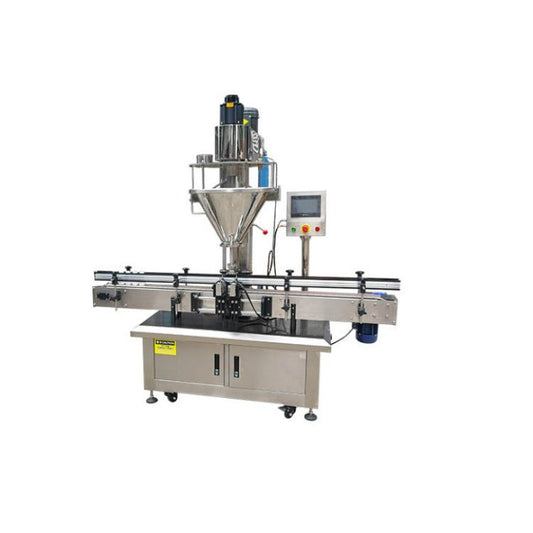
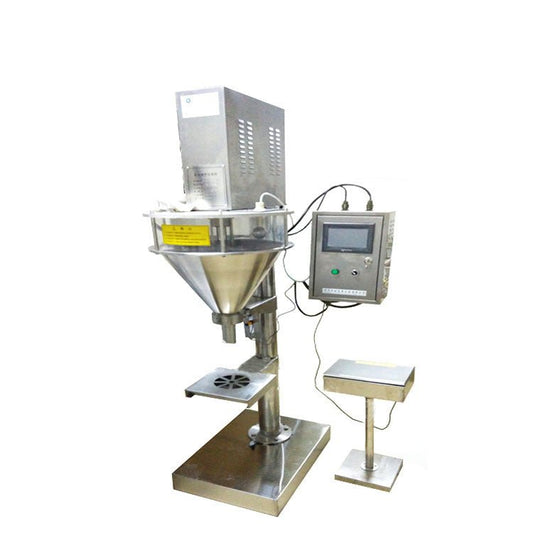
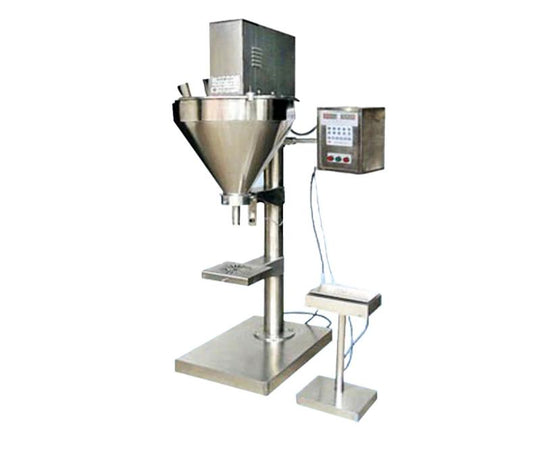
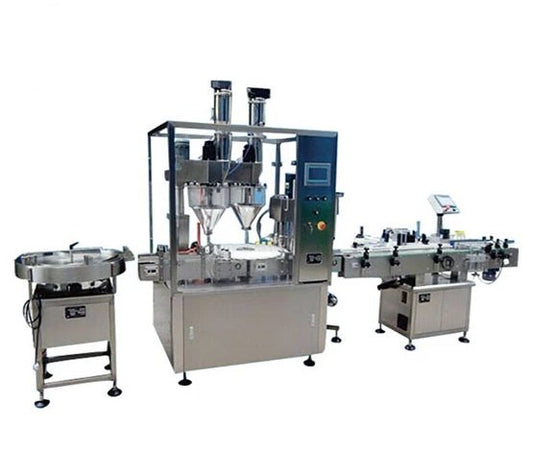
Collection: Powder Filling Machine (Auger & Volumetric Fillers)
About Powder Filling Machine (Auger & Volumetric Fillers)
A powder filling machine measures and dispenses dry bulk powders - such as milk powder, spices, protein, flour and pharmaceutical blends - into bottles, jars, pouches, sachets or cans. Auger fillers use a rotating screw for fine or non-free-flowing powders, while volumetric cup and net-weight systems suit free-flowing or regulated products. They are essential in food, nutraceutical, pharmaceutical, chemical and cosmetic production.
How to Choose
- Dosing method - auger for fine or cohesive powders, volumetric cup for free-flowing granules, net or gross weight for tight regulatory accuracy.
- Product flowability - assess bridging, moisture and particle size; sticky or hygroscopic powders need agitation or enclosed systems.
- Container format - confirm it handles bottles, jars, premade pouches, stick packs or bags you run.
- Fill accuracy and speed - match plus or minus 0.5 to 2 percent tolerance and output (e.g. 60-90 containers per minute) to your line.
- Hygiene and cleanability - choose 304 or 316 stainless contact parts, tool-free auger change and dust extraction.
FAQ
Q: What type of powder filling machine is best for flour or milk powder?
A: Auger fillers with servo drives handle fine, cohesive powders like flour and milk powder accurately; net-weight systems add precision for expensive or regulated blends.
Q: Can one machine fill both powders and granules?
A: Yes, many auger fillers switch between powders and fine granules by changing the screw and settings, but free-flowing granules may run better on volumetric cup fillers.
Q: How accurate are powder fillers?
A: Accuracy depends on the method: servo auger fillers typically achieve plus or minus 1 to 2 percent, while net-weight fillers with load cells can reach plus or minus 0.25 percent for strict compliance.
Q: Do powder fillers need a dust collection system?
A: For fine or dusty powders, an integrated dust extraction system protects operators and keeps the seal area clean, improving both hygiene and fill consistency.