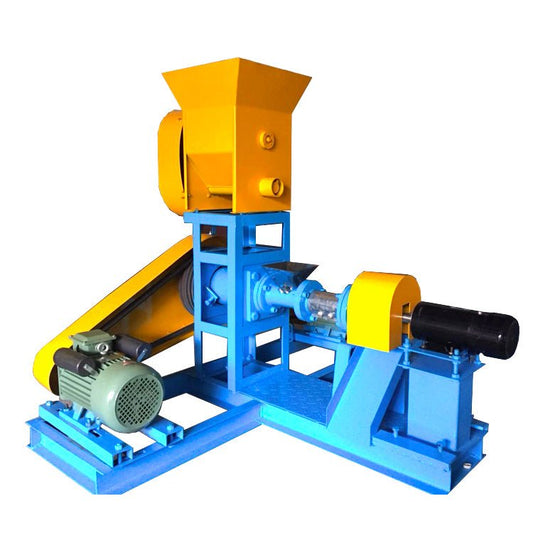
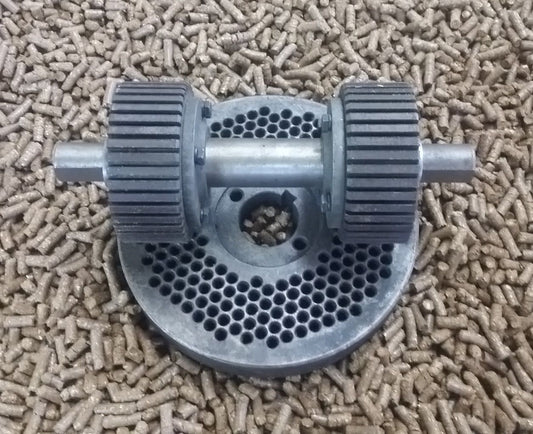
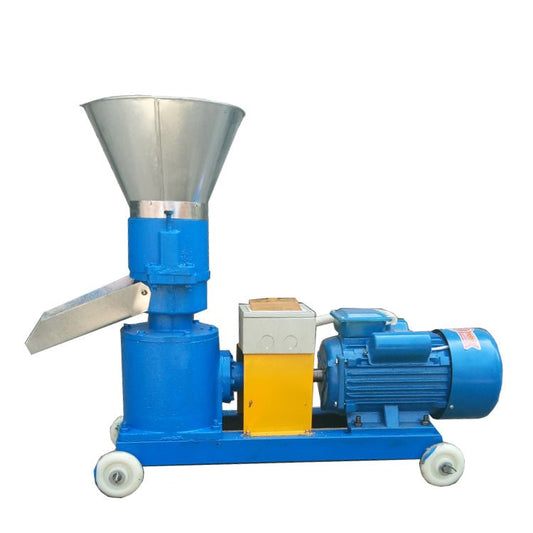
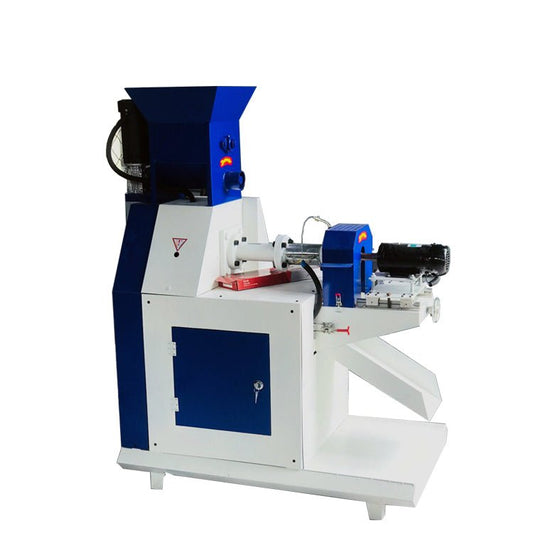
Collection: Pellet Mill Machine (Pelletizer) for Animal Feed, Wood & Biomass Pellet Production
About Pellet Mill Machine (Pelletizer) for Animal Feed, Wood & Biomass Pellet Production
A pellet mill (pelletizer) compresses ground raw material—grain, sawdust, straw, husks or agricultural residue—through a die under high pressure and heat to form dense, uniform pellets. The natural binder lignin softens and binds particles, improving handling, transport and combustion or feed efficiency. Two main designs exist: flat die (small-scale, portable) and ring die (industrial, high-capacity) pellet mills, used for animal feed, biomass fuel and organic fertiliser.
How to Choose
- Die type: flat die for small farms/household; ring die for industrial high-throughput feed or wood pellet production.
- Raw material & moisture: match to material (grain, sawdust, straw) and condition moisture for pellet quality and binding.
- Capacity & power: size the mill to target output and available power source (electric, diesel or gasoline).
- Application: feed pellets need nutrient stability; biomass pellets need density/calorific value; fertiliser pellets need binding.
FAQ
Q: What is the difference between flat die and ring die pellet mills?
A: Flat die mills are compact, affordable and suit small-scale use; ring die mills are industrial, higher-output and more energy-efficient.
Q: What raw materials can be pelleted?
A: Grains, soybean meal, sawdust, straw, husks, peanut shells and other agricultural or forestry residues or feed ingredients.
Q: Why condition moisture before pelleting?
A: Proper moisture and steam conditioning soften material so lignin binds particles into stable, durable pellets.
Q: What are pellets used for?
A: Animal feed, biomass or renewable fuel for heating and power, and organic fertiliser—each improving storage, transport and efficiency.