

CECLE Machine
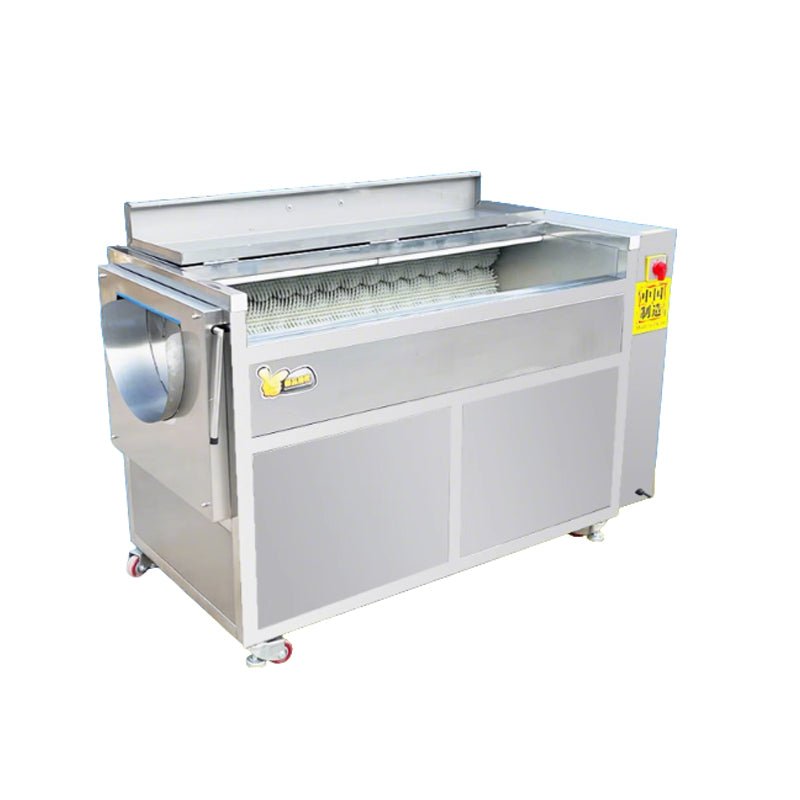
Industrial Brush Roller Peeler and Washer Machine for Root Vegetables
Industrial Brush Roller Peeler and Washer Machine for Root Vegetables
Couldn't load pickup availability
CECLE vs. Traditional / Generic Alternative
Where the CECLE stands out against manual or generic machine — measured on the dimensions buyers care about most.
Technical Specifications
Specifications: Customizable upon request.
| Technical Specifications | Model 45 Compact Commercial | Model 60 Standard Commercial | Model 80 High-Efficiency | Model 100 Industrial High-Capacity |
|---|---|---|---|---|
| Model Number | Model 45 (HRP-45) | Model 60 (HRP-60) | Model 80 (HRP-80) | Model 100 (HRP-100) |
| Effective Roller Length | 45 cm (~17.7″) | 60 cm (~23.6″) | 80 cm (~31.5″) | 100 cm (~39.4″) |
| Rated Operating Voltage | 220V / 110V | 220V / 110V | 220V / 110V | 220V / 110V |
| Motor Rated Power | 0.75 kW | 1.5 kW | 2.2 kW | 2.2 kW |
| Batch Processing Capacity | Approx. 10 – 12 kg/batch | Approx. 15 – 20 kg/batch | Approx. 35 – 40 kg/batch | Approx. 40 – 50 kg/batch |
| Cycle Processing Time | 2 – 5 min/batch | 2 – 5 min/batch | 2 – 5 min/batch | 2 – 5 min/batch |
| Estimated Throughput | 150 – 250 kg/h | 300 – 400 kg/h | 500 – 700 kg/h | 800 – 1000 kg/h |
| Overall Dimensions (L×W×H) | 70 × 60 × 70 cm | 96 × 76 × 90 cm | 116 × 76 × 90 cm | 136 × 76 × 90 cm |
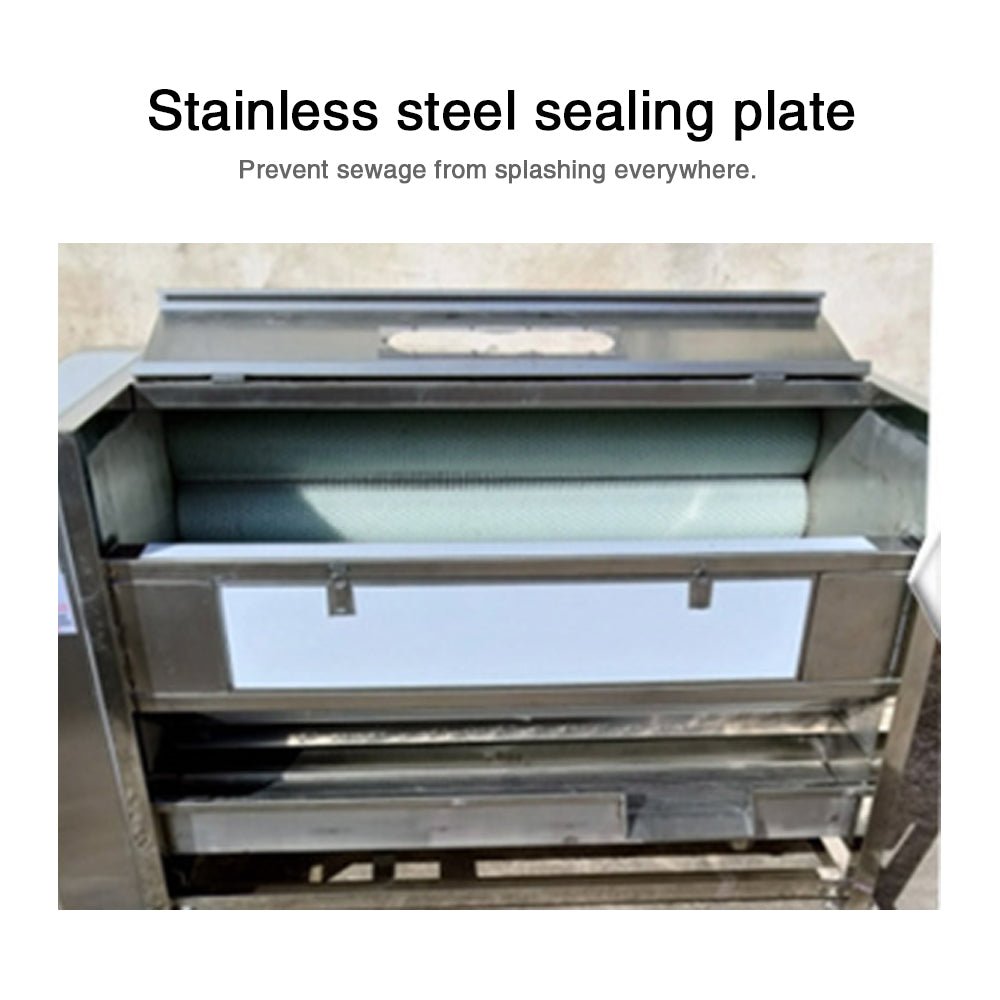
| Body Construction | All SUS304 Food-Grade Stainless Steel + Heavy-duty nylon rollers | All SUS304 Food-Grade Stainless Steel + Heavy-duty nylon rollers | All SUS304 Food-Grade Stainless Steel + Heavy-duty nylon rollers | All SUS304 Food-Grade Stainless Steel + Heavy-duty nylon rollers |
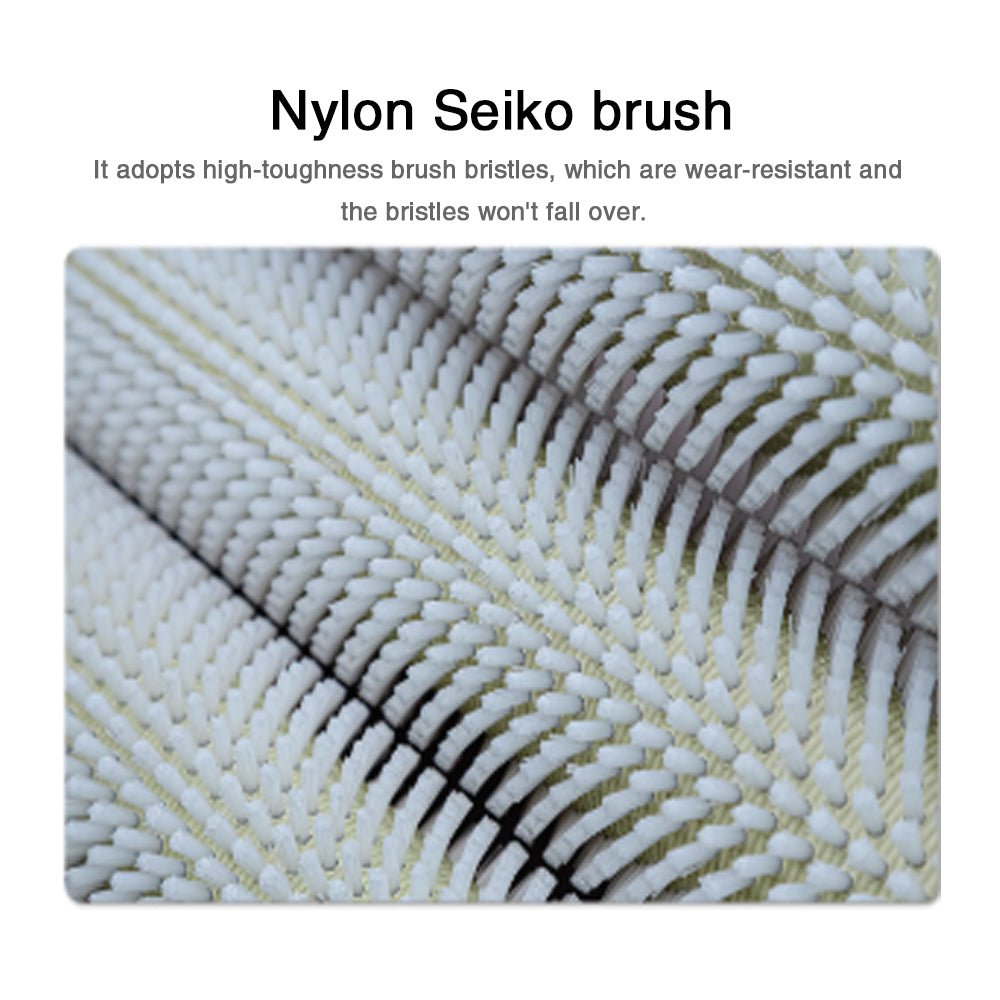
| Roller Type Options | Soft (wash & preserve peel) / Hard (peel) / Emery (heavy peel) | Soft (wash & preserve peel) / Hard (peel) / Emery (heavy peel) | Soft (wash & preserve peel) / Hard (peel) / Emery (heavy peel) | Soft (wash & preserve peel) / Hard (peel) / Emery (heavy peel) |
| Discharge Method | Rotary propulsion automatic side-door discharge | Rotary propulsion automatic side-door discharge | Rotary propulsion automatic side-door discharge | Rotary propulsion automatic side-door discharge |
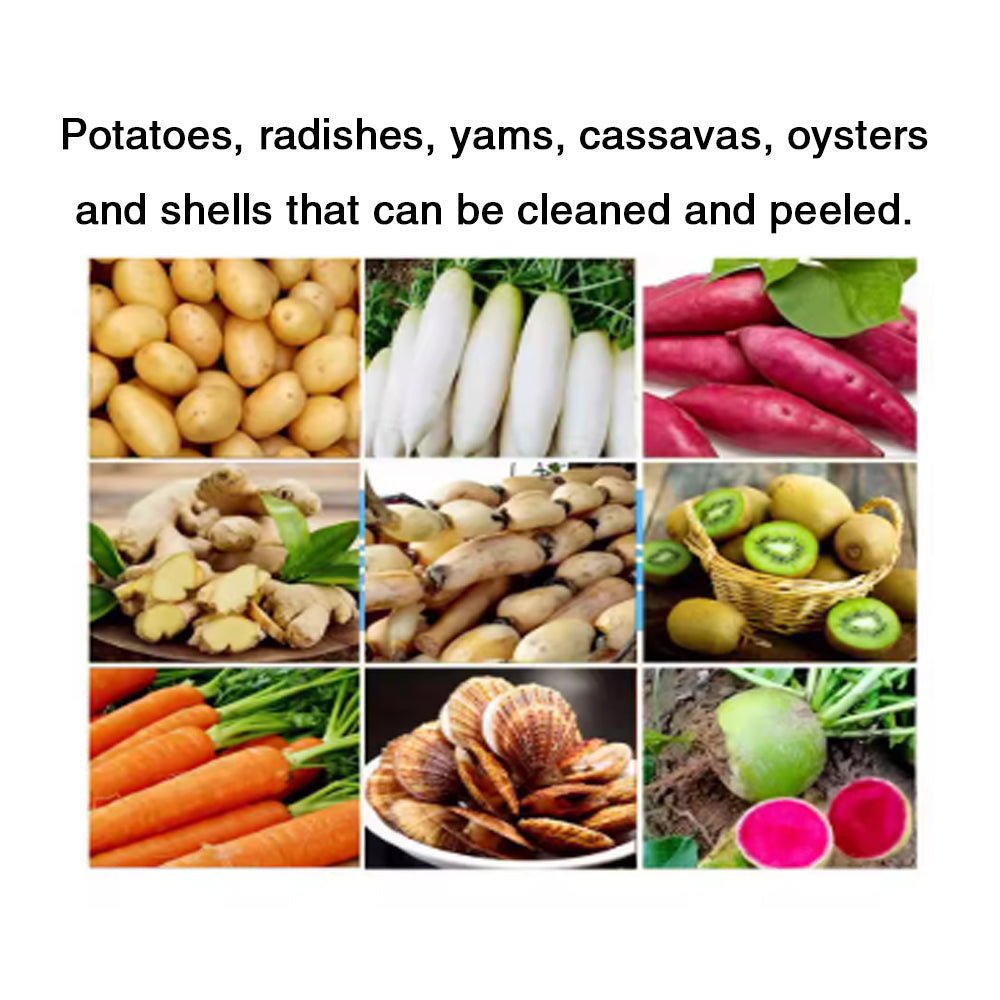
| Applicable Products | Potatoes, lotus root, cassava, yam, oysters, sweet potatoes, radishes, ginger, scallops, etc. | Potatoes, lotus root, cassava, yam, oysters, sweet potatoes, radishes, ginger, scallops, etc. | Potatoes, lotus root, cassava, yam, oysters, sweet potatoes, radishes, ginger, scallops, etc. | Potatoes, lotus root, cassava, yam, oysters, sweet potatoes, radishes, ginger, scallops, etc. |
Compatible Applications & Materials
- industrial products — primary target products for this Machine line
- Standard industrial materials compatible with the machine's rated spec range
- B2B production lines and contract manufacturing workshops
Standard Operating Procedure (SOP)
- Setup: connect the required power / air supply and verify the control display.
- Parameter preset: set speed / temperature / pressure per the product spec.
- Material loading: place the product in the correct fixture / mold slot.
- Execution: start the cycle; monitor for stable, repeatable output.
- Quality check: inspect the first units; adjust if deviation appears.
- Safety & cooldown: use Emergency Stop on abnormality; allow cooldown before maintenance.
Engineering FAQ
What is the main difference between a brush roller machine and a vertical cylinder abrasive peeler? Why must lotus root and yam use a brush roller machine?
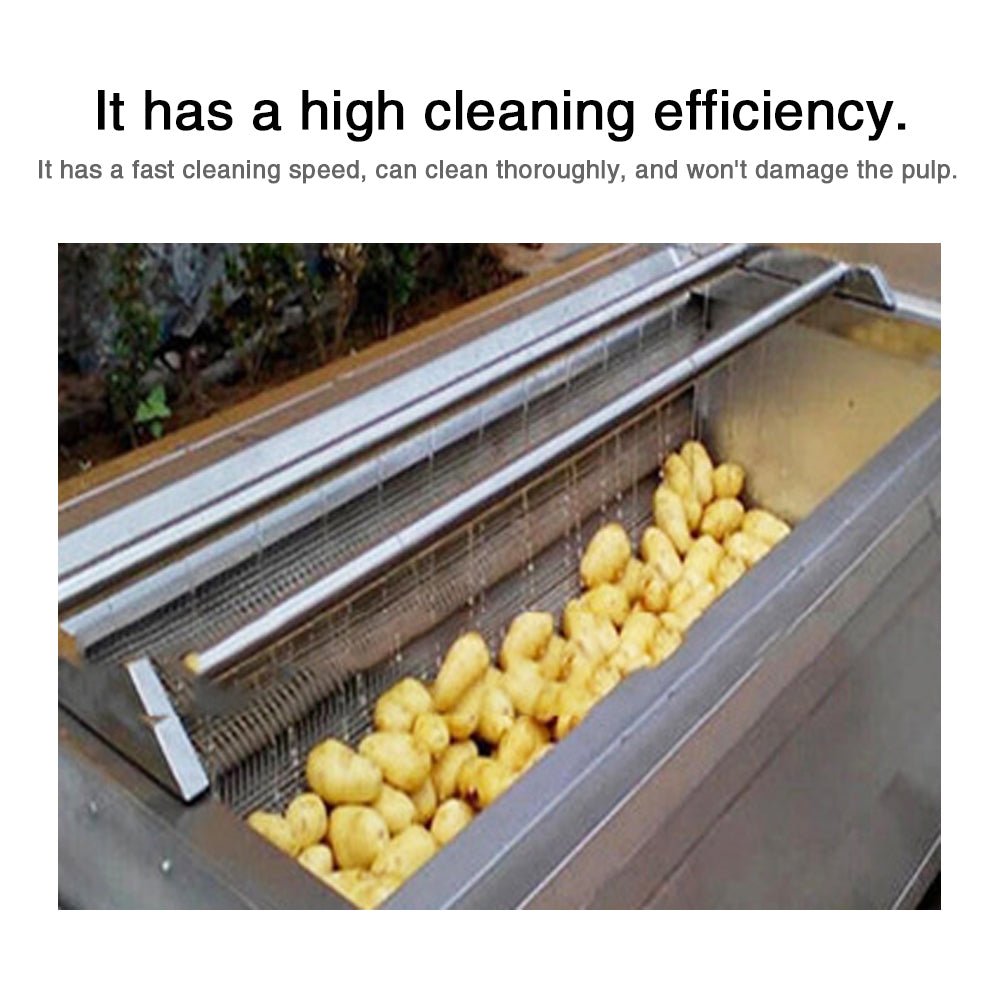
A: Vertical cylinder abrasive peelers rely on high-speed centrifugal rotation that flings products against an abrasive abrasive lining. This works well for round or oval items (like regular potatoes and taro). However, elongated and fragile items like lotus roots, yams, and cassava will snap and break immediately upon high-speed impact, resulting in catastrophic loss. The brush roller machine uses a horizontal multi-roller bed where items lie flat and roll gently over soft or medium bristles. It cleans stubborn mud out of deep joints without breaking or bruising elongated crops.
What is the difference between soft and hard brush rollers? Can they be interchanged based on our processing needs?
A: They differ in bristle stiffness and target applications: Soft Bristles (Fine undulating filaments) : Designed for "mud and grime removal while preserving outer skin," perfect for crisp lotus root, new potatoes, carrots, and water chestnuts where peeling is unwanted. Hard Bristles / Emery Rollers (Thickened stiff filaments or abrasive grit) : Designed for "aggressive peeling and scouring," suitable for aged potatoes, tough sweet potatoes, mature ginger, and cassava requiring skin removal. Customers can specify roller configurations directly with CECLE according to their processing requirements.
Can this machine wash raw shellfish like oysters and scallops? Will it crack the shells?
A: Yes, oyster and shellfish cleaning is one of this machine's most celebrated commercial applications. Shellfish often have encrusted mud, barnacles, and marine algae that are difficult and hazardous to scrub by hand. The dense, high-elasticity nylon bristles combined with pressurized water jets thoroughly clean the deep shell ridges from all angles. Because the bristles provide natural cushioning, they will not crack the shells, delivering spotless oysters for high-end raw bars, oyster barbecues, and seafood supply hubs.
What routine maintenance keeps the stable for long production runs?
A: Keep the working area clean, verify the rated power/air supply before each shift, and inspect wear parts per the technical manual. Stable input conditions are the main factor in consistent output and long service life.
Which product sizes and formats can the handle?
A: The machine is configured for its rated specification range (see Technical Specifications). For formats outside the standard range, CECLE can advise on tooling or model selection.
Full Documentation & Drawings
Complete technical manual, parameters and engineering drawings: CECLE Docs —
Related CECLE Machines
Request a Quote
Send your product specifications, target output and format details to CECLE for a tailored configuration, lead time and factory-direct quotation.
Share