

CECLE Machine
Commercial Electric Soy Milk Maker and Grinder with Filter
Commercial Electric Soy Milk Maker and Grinder with Filter
Couldn't load pickup availability
CECLE vs. Traditional / Generic Alternative
Where the CECLE stands out against manual or generic soy milk stone mill — measured on the dimensions buyers care about most.
Technical Specifications
| Technical Parameter | SY-40 Electric Heating Model | SY-40 Gas Heating Model |
|---|---|---|
| Model | SY-40 (Electric) | SY-40 (Gas) |
| Single-Batch Boiling Capacity | Approx. 40 L (High-Efficiency Commercial Deep Kettle) | Approx. 40 L (High-Efficiency Commercial Deep Kettle) |
| Raw Soybean Throughput | Approx. 40 – 60 kg/h (Dry Soybean Feed Rate) | Approx. 40 – 60 kg/h (Dry Soybean Feed Rate) |
| Fresh Soy Milk Output | Approx. 150 – 250 L/h (Adjustable by Water-to-Bean Ratio) | Approx. 150 – 250 L/h (Adjustable by Water-to-Bean Ratio) |
| Power Supply Configuration | 220V 50Hz Single-Phase / 380V 50Hz 3-Phase (Configurable) | 220V 50Hz / 110V 60Hz (Blower & Instrument Power) |
| Heating Power / Thermal Load | Approx. 9 kW – 12 kW (Multi-Element Electric Array) | Approx. 2.8 – 3.5 kPa (LPG / LNG High-Heat Burner) |
| Time to Reach Boiling Point | Approx. 20 – 30 min / Batch | Approx. 18 – 25 min / Batch |
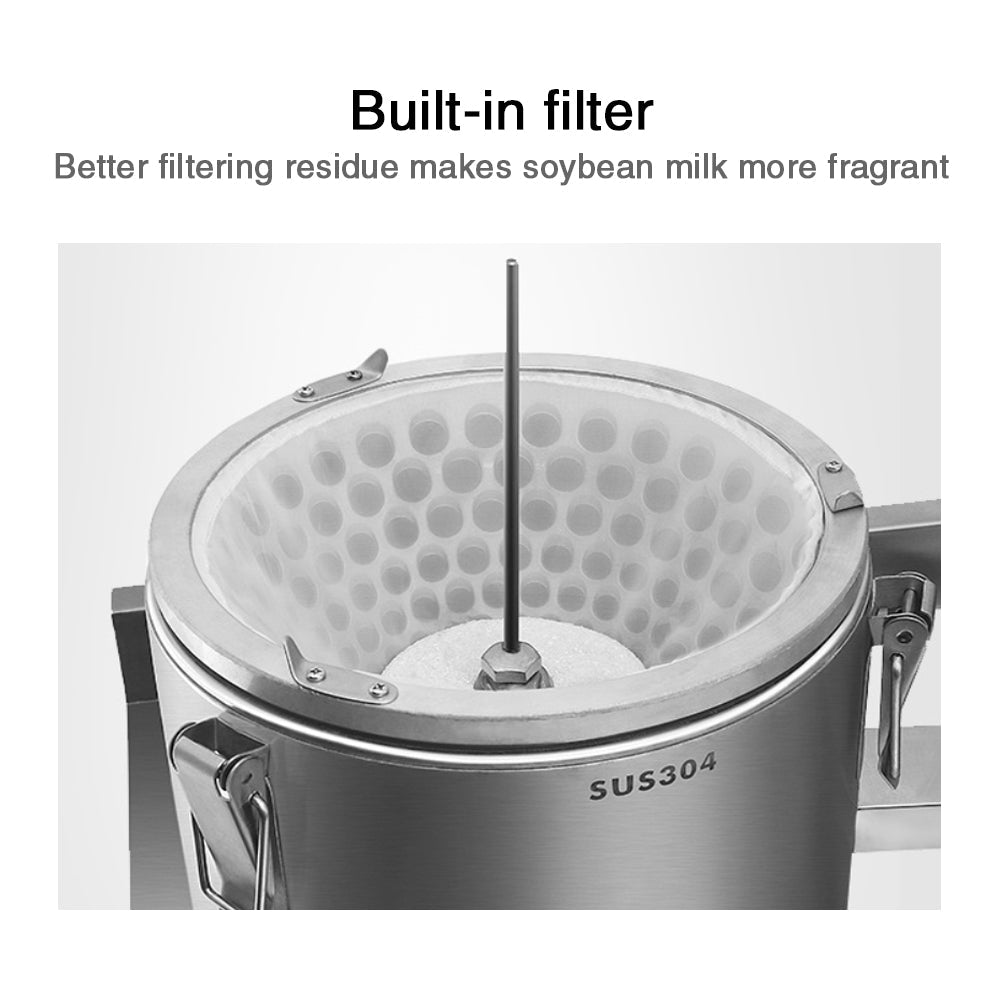
| Filtration Mesh | 100 Mesh Food-Grade Stainless Steel / Nylon Integrated Filter | 100 Mesh Food-Grade Stainless Steel / Nylon Integrated Filter |
| Construction Material | Heavy-Gauge AISI 304 Food-Grade Stainless Steel Body, Pipe & Kettle / Pure Copper Motor | |
| Chassis Profile | Vertical Cabinet-Integrated Unit (with Ball Valve, Steam Vent & Control Panel) | |
| Logistics & Delivery | Ocean Freight DDP Door-to-Door (Approx. 25–35 days) / Air Cargo Heavy-Freight |
Compatible Applications & Materials
- industrial products — primary target products for this Soy Milk Stone Mill line
- Standard industrial materials compatible with the machine's rated spec range
- B2B production lines and contract manufacturing workshops
Standard Operating Procedure (SOP)
- To maintain consistent output quality, prolong heating element life, and prevent operator scalding, adhere strictly to the following procedures:
Engineering FAQ
How should I choose between the Electric Heating model and the Gas Heating model?
A: Both models deliver identical finished soy milk quality, flavor, and extraction rates. The choice depends on your facility's utility infrastructure: If your commercial space is equipped with 380V 3-phase industrial power (or a high-amperage dedicated 220V line), the Electric model is recommended for its flameless, vent-free, clean, and highly precise operation. If you operate in street-front kiosks, open markets, or locations with restricted electric capacity, the Gas model (compatible with LPG tanks or natural gas pipelines) provides powerful, rapid heating at an economical operating cost.
Why is it critical to clean the boiling kettle immediately after each batch is drained? Can I wait a few hours?
A: It is strongly recommended to wash the kettle immediately after each discharge! Soy milk contains high concentrations of vegetable proteins that quickly bake and harden into a stubborn film when exposed to a hot, empty kettle. If left unwashed, this dried protein layer will carbonize and scorch during the next heating cycle, turning subsequent batches dark and bitter with a burnt off-flavor. Rinsing immediately with warm water and a soft brush takes less than 60 seconds.
Can the extracted raw milk be drained directly from the machine for raw chilled packaging or cold tofu processing?
A: Yes. The intermediate transfer conduit is versatile. If your production line requires raw soy milk (for traditional artisanal copper-pot curdling or chilled bottled raw milk distribution), simply divert the output conduit into an external collection vessel without engaging the heating system, using the unit as a high-capacity standalone grinder and separator.
What routine maintenance keeps the stable for long production runs?
A: Keep the working area clean, verify the rated power/air supply before each shift, and inspect wear parts per the technical manual. Stable input conditions are the main factor in consistent output and long service life.
Which product sizes and formats can the handle?
A: The machine is configured for its rated specification range (see Technical Specifications). For formats outside the standard range, CECLE can advise on tooling or model selection.
Full Documentation & Drawings
Complete technical manual, parameters and engineering drawings: CECLE Docs —
Related CECLE Machines
Request a Quote
Send your product specifications, target output and format details to CECLE for a tailored configuration, lead time and factory-direct quotation.
Share