

CECLE Machine
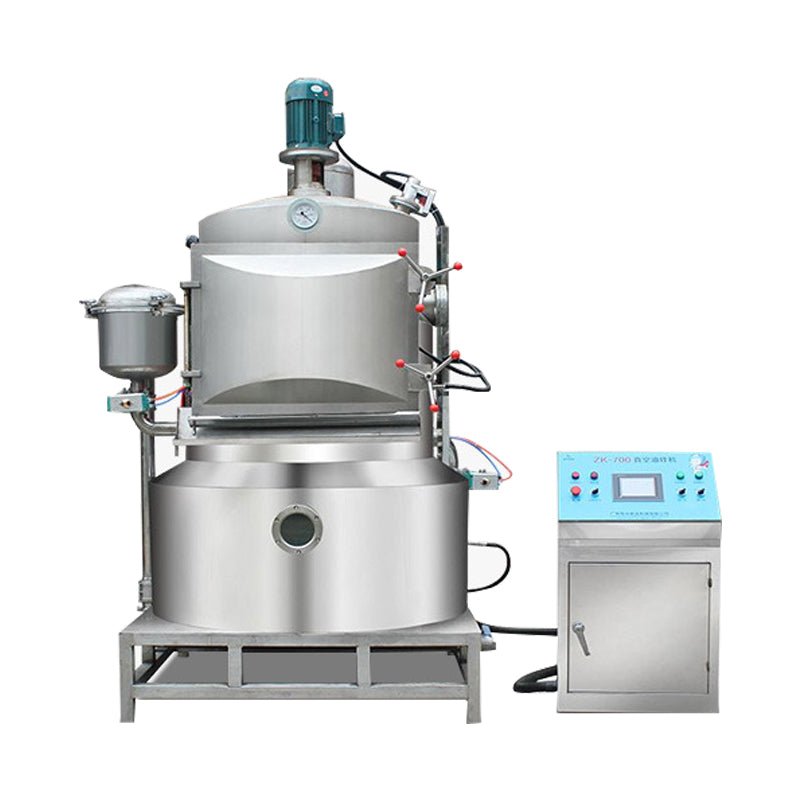
ZK-500 Low-Temperature Vacuum Fryer for Fruits & Vegetables (Batch-Type)
ZK-500 Low-Temperature Vacuum Fryer for Fruits & Vegetables (Batch-Type)
Couldn't load pickup availability
CECLE ZK-500 vs. Traditional / Generic Alternative
Where the CECLE ZK-500 stands out against manual or generic low-temperature vacuum fryer — measured on the dimensions buyers care about most.
Technical Specifications
| Technical Parameters | ZK-350 Compact Pilot Model | ZK-500 Standard Commercial (Flagship) | ZK-700 High-Output Industrial | ZK-1200 Large Factory Line |
|---|---|---|---|---|
| Model | ZK-350 | ZK-500 | ZK-700 | ZK-1200 |
| Rated Operating Voltage | 380V (50/60Hz) / Custom Voltage Available | 380V (50/60Hz) / Custom Voltage Available | 380V 3-Phase (50/60Hz) | 380V 3-Phase (50/60Hz) |
| Total System Installed Power | Approx. 15 – 22 kW | Approx. 30 – 45 kW | Approx. 55 – 75 kW | Approx. 90 – 120 kW |
| Batch Processing Capacity | Approx. 15 – 20 kg / batch | Approx. 40 – 60 kg / batch | Approx. 90 – 120 kg / batch | Approx. 200 – 300 kg / batch |
| Ultimate Working Vacuum | -0.092 to -0.098 MPa | -0.095 to -0.098 MPa | -0.096 to -0.099 MPa | -0.096 to -0.099 MPa |
| Adjustable Oil Temp Range | 70°C – 120°C (Gentle thermal drying) | 70°C – 120°C (Gentle thermal drying) | 70°C – 120°C (Gentle thermal drying) | 70°C – 120°C (Gentle thermal drying) |
| Centrifugal De-Oiling Speed | 100 – 600 rpm (Variable Frequency) | 100 – 600 rpm (Variable Frequency) | 100 – 500 rpm (Variable Frequency) | 100 – 500 rpm (Variable Frequency) |
| Finished Product Oil Content | ≤ 8% – 15% (Varies by ingredient) | ≤ 8% – 15% (Varies by ingredient) | ≤ 7% – 12% (Maximum extraction) | ≤ 7% – 12% (Maximum extraction) |
| Vessel & Frame Metallurgy | Heavy-duty food-grade SUS304 Stainless Steel | Heavy-duty food-grade SUS304 Stainless Steel | Heavy-duty food-grade SUS304 Stainless Steel | Heavy-duty food-grade SUS304 Stainless Steel |
| Control Architecture | Industrial PLC + Color Touch HMI | Industrial PLC + Color Touch HMI | Industrial PLC + Color Touch HMI | Industrial PLC + Remote Data Port |
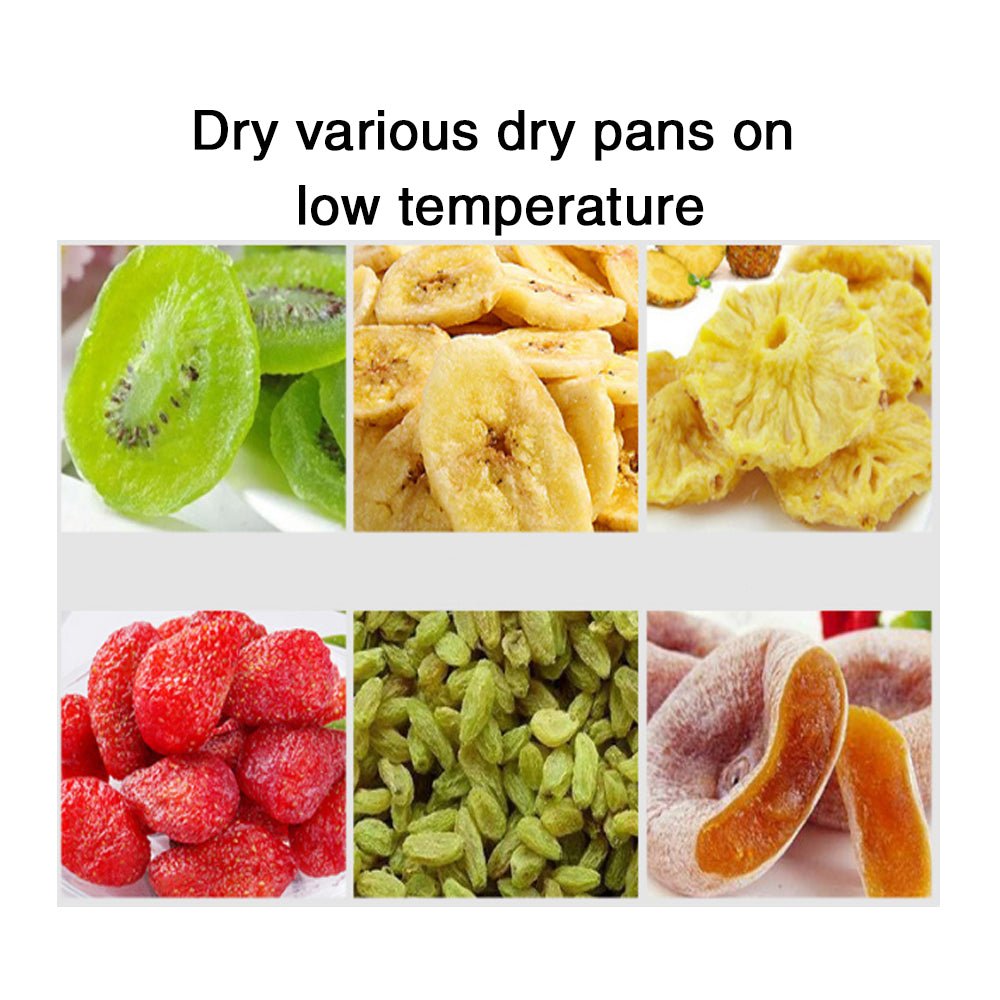
| Applicable Raw Materials | Banana, jackfruit, apple, winter jujube, strawberry, okra, edible fungi, purple yam, carrot, sweet potato, shrimp, fish chips | |||
| Global Logistics Solutions | Industrial Heavy-Cargo Ocean Freight to Door (45–60 Days) / Full Container Load (FCL/LCL) |
Compatible Applications & Materials
- industrial products — primary target products for this Low-Temperature Vacuum Fryer line
- Standard industrial materials compatible with the machine's rated spec range
- B2B production lines and contract manufacturing workshops
Standard Operating Procedure (SOP)
- To ensure maximum puffing crispness, maintain high operating vacuum, and protect thermal oil quality, strictly observe the following SOP:
Engineering FAQ
What is the fundamental difference between low-temperature vacuum frying and conventional atmospheric deep frying?
A: They differ substantially across three dimensions: Operating Temperature : Conventional frying operates at 160°C–220°C (320°F–428°F), degrading vitamins, scorching sugars, and generating acrylamide carcinogens. Low-temperature vacuum frying lowers water's boiling point under high negative pressure, holding oil temperatures at a gentle 85°C–105°C (185°F–221°F) to gently dehydrate rather than scorch. Oil Content : Atmospherically fried goods absorb 35%–45% oil upon exiting the fryer. Vacuum frying utilizes in-situ vacuum centrifugal spinning, bringing final oil content down to 8%–15% for a crisp, non-greasy bite. Color & Nutrient Retention : The near-absence of oxygen prevents thermal oxidation and enzymatic browning, retaining nearly 100% of the produce's natural color, aromatic volatiles, and vitamins without artificial preservatives.
Why must centrifugal de-oiling take place under vacuum before breaking the chamber pressure?
A: This is the core engineering hurdle of the vacuum-frying process. When frying concludes, the microscopic cellular pores of the produce are filled with low-pressure water vapor. If the chamber were vented to atmospheric pressure before spinning, external ambient air would act like a piston, forcing surface oil deep into the porous matrix where it cannot be removed. Conducting centrifugal de-oiling within the vacuum envelope removes surface oil while pores remain open, ensuring low oil retention once vented.
Why is blast-freezing ingredients to -18°C strongly recommended prior to vacuum frying?
A: Fresh, unfrozen produce contains free-moving water that boils out erratically under vacuum, causing shrinkage, curling, case-hardening, and a tough, leathery texture. Blast-freezing locks cellular moisture into uniform microscopic ice crystals. In warm vacuum oil, these ice crystals sublimate rapidly into vapor, propping open an airy, structural cellular framework that yields flat, unbroken chips with a light, melt-in-the-mouth crunch.
What routine maintenance keeps the ZK-500 stable for long production runs?
A: Keep the working area clean, verify the rated power/air supply before each shift, and inspect wear parts per the technical manual. Stable input conditions are the main factor in consistent output and long service life.
Which product sizes and formats can the ZK-500 handle?
A: The machine is configured for its rated specification range (see Technical Specifications). For formats outside the standard range, CECLE can advise on tooling or model selection.
Full Documentation & Drawings
Complete technical manual, parameters and engineering drawings: CECLE Docs — ZK-500
Related CECLE Machines
Request a Quote
Send your product specifications, target output and format details to CECLE for a tailored configuration, lead time and factory-direct quotation.
Share