

CECLE Machine
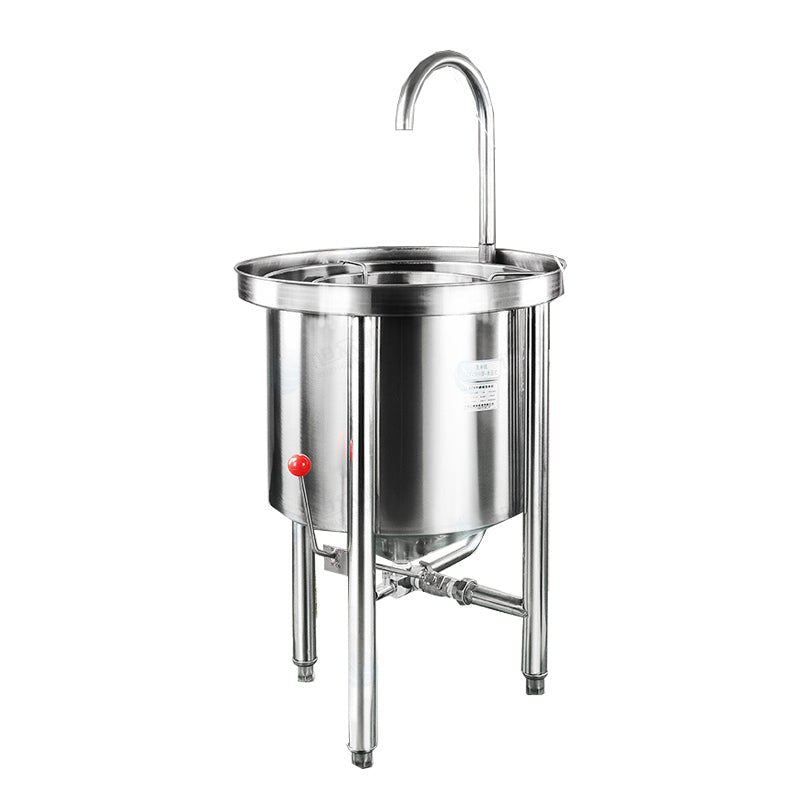
Industrial Ultrasonic Rice and Bean Washer Machine
Industrial Ultrasonic Rice and Bean Washer Machine
Couldn't load pickup availability
CECLE vs. Traditional / Generic Alternative
Where the CECLE stands out against manual or generic machine — measured on the dimensions buyers care about most.
Technical Specifications
Specifications: Customizable upon request.
| Technical Specifications | URW-25 Compact Standard | URW-50 Commercial Efficient | URW-100 High-Capacity Central Kitchen |
|---|---|---|---|
| Model Number | URW-25 | URW-50 | URW-100 |
| Rated Voltage | 110V / 220V (50/60Hz) | 110V / 220V (50/60Hz) | 110V / 220V (50/60Hz) |
| Ultrasonic Rated Power | 600 W | 1200 W | 2400 W |
| Circulation Pump Power | 0.75 kW | 1.5 kW | 2.2 kW |
| Recommended Batch Capacity | 15 – 25 kg / batch | 40 – 50 kg / batch | 80 – 100 kg / batch |
| Processing Time Per Batch | 1.5 – 3 minutes / batch | 1.5 – 3 minutes / batch | 1.5 – 3 minutes / batch |
| Total Hourly Throughput | 300 – 500 kg/h (~660–1100 lbs/h) | 600 – 800 kg/h (~1320–1760 lbs/h) | 1000 – 1500 kg/h (~2200–3300 lbs/h) |
| Ultrasonic Frequency | 28 kHz / 40 kHz Dual Composite | 28 kHz / 40 kHz Dual Composite | 28 kHz / 40 kHz Dual Composite |
| De-Stoning Efficiency | ≥ 99.2% | ≥ 99.5% | ≥ 99.8% |
| Grain Breakage Rate | ≤ 0.1% (Virtually zero) | ≤ 0.1% (Virtually zero) | ≤ 0.1% (Virtually zero) |
| Dimensions (L × W × H) | 80 × 65 × 95 cm (31.5″×25.6″×37.4″) | 95 × 80 × 110 cm (37.4″×31.5″×43.3″) | 125 × 95 × 125 cm (49.2″×37.4″×49.2″) |
| Body Construction | Heavy-duty SUS304 Food-Grade Stainless Steel | Heavy-duty SUS304 Food-Grade Stainless Steel | Heavy-duty SUS304 Food-Grade Stainless Steel |
Compatible Applications & Materials
- industrial products — primary target products for this Machine line
- Standard industrial materials compatible with the machine's rated spec range
- B2B production lines and contract manufacturing workshops
Standard Operating Procedure (SOP)
- To maintain cleaning efficiency, component sealing, and electrical safety, follow these standardized operating procedures:
Engineering FAQ
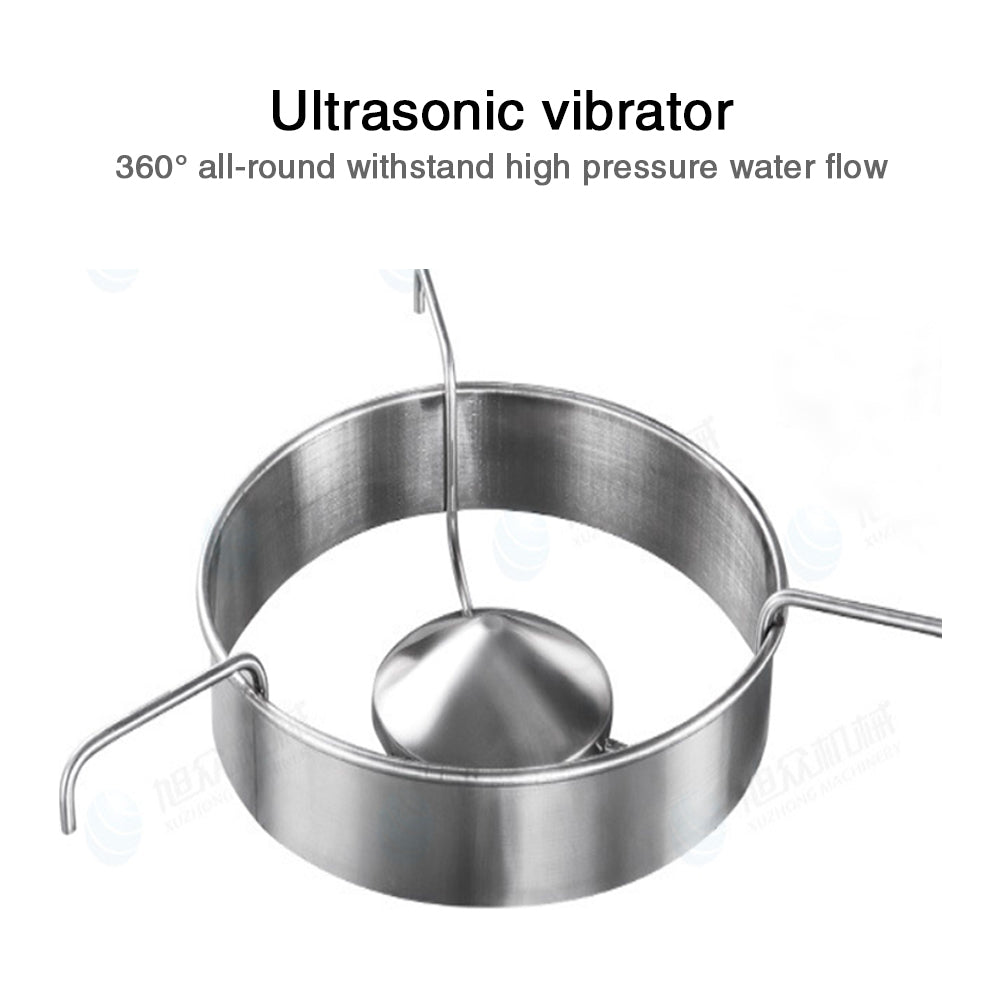
What is the core advantage of ultrasonic grain washing over mechanical agitator or hydro-jet washers? Will ultrasonic waves crack the rice?
A: Mechanical agitator washers rely on spinning paddles that physically beat grains, often resulting in high breakage rates (3%–8%). This damages grain geometry and leaches free starches, causing cooked rice to turn mushy and sticky. Ultrasonic cleaning is a microscopic physical cavitation process: collapsing microbubbles dislodge surface dust and bran without mechanical impact, resulting in virtually zero broken grain . The washed rice remains translucent with intact germ tips, cooking into fluffy, resilient grains that hold well in thermal warmers without yellowing.
How does the unit separate fine sand/gravel and floating chaff from rice?
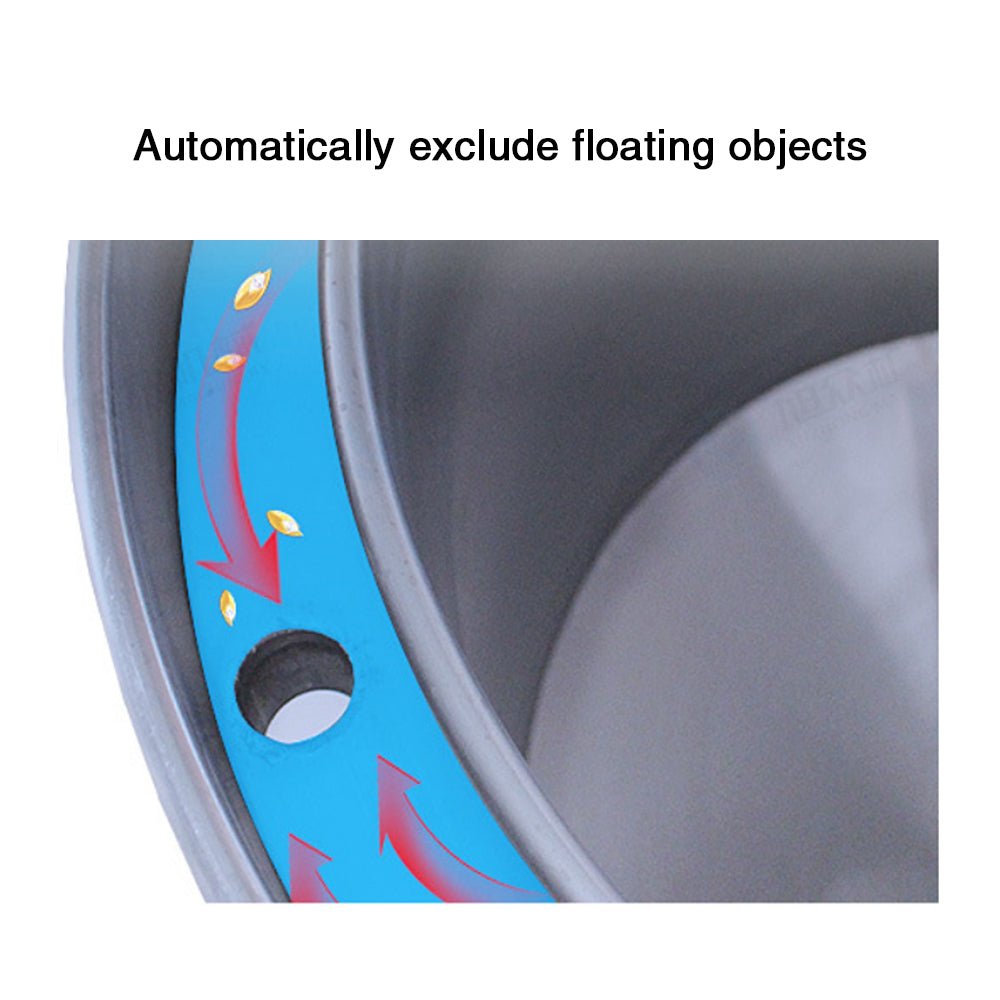
A: It uses a dual-action separation principle based on specific gravity: Heavy De-Stoning : Stones and sand (>2.5 g/cm³) are denser than soaked grains (~1.35 g/cm³). The bottom swirling currents keep grains suspended while gravel sinks past the upward flow into the bottom sediment cone, where it is isolated from the circulation loop. Light Chaff Skimming : Hollow hulls, grass fragments, and insect eggs (<1.0 g/cm³) attach to rising ultrasonic microbubbles and float to the surface, where they exit continuously through the peripheral overflow weir into a collection screen.
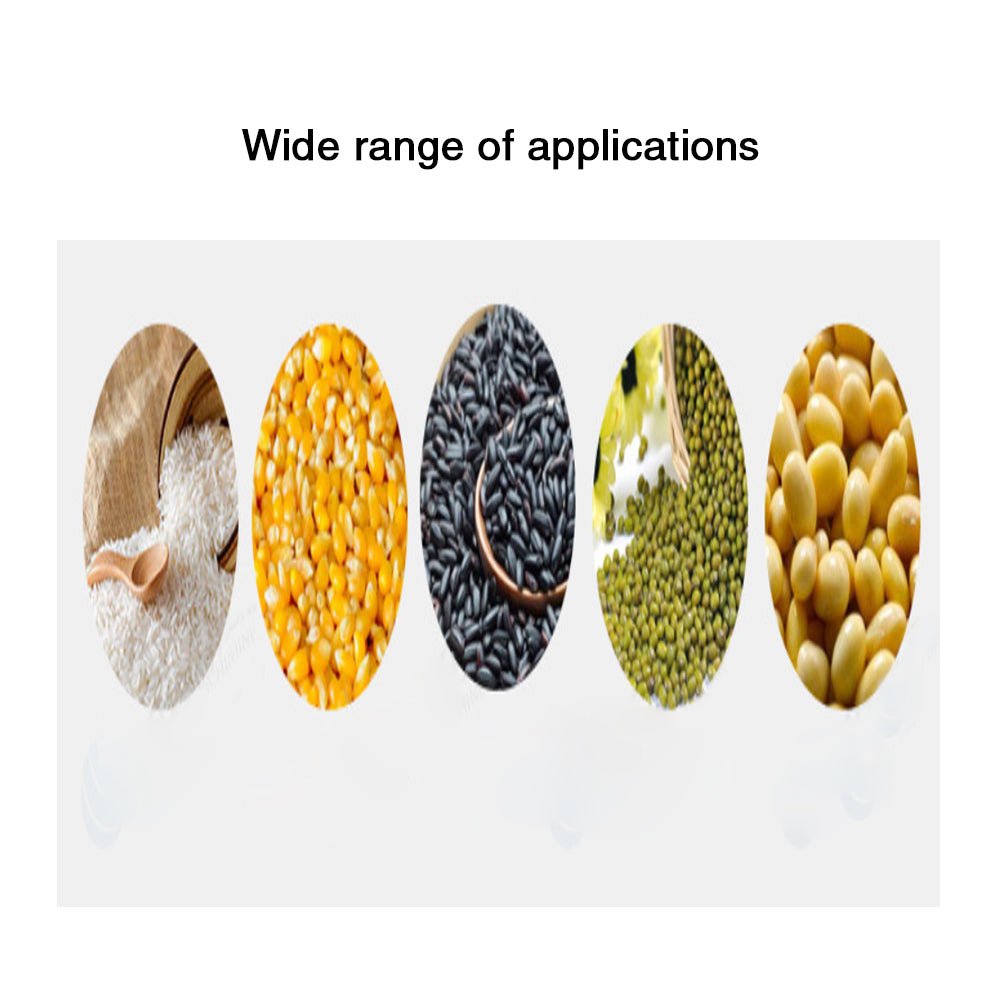
When switching between rice, soybeans, mung beans, and corn kernels, does the machine require hardware changes?
A: No hardware modifications are needed. The URW series offers broad crop compatibility. When washing larger or denser items like soybeans, corn, or chickpeas, simply adjust two settings on the touchscreen: increase the wash timer by 30–60 seconds, and turn up the pump frequency knob slightly to increase upward lift. Ultrasonic cavitation also penetrates bean surface pores, removing deep-seated dirt from the hilum while activating bean cell permeability, which accelerates hydration by 15%–20% and boosts soy milk and tofu yields.
What routine maintenance keeps the stable for long production runs?
A: Keep the working area clean, verify the rated power/air supply before each shift, and inspect wear parts per the technical manual. Stable input conditions are the main factor in consistent output and long service life.
Which product sizes and formats can the handle?
A: The machine is configured for its rated specification range (see Technical Specifications). For formats outside the standard range, CECLE can advise on tooling or model selection.
Full Documentation & Drawings
Complete technical manual, parameters and engineering drawings: CECLE Docs —
Related CECLE Machines
Request a Quote
Send your product specifications, target output and format details to CECLE for a tailored configuration, lead time and factory-direct quotation.
Share