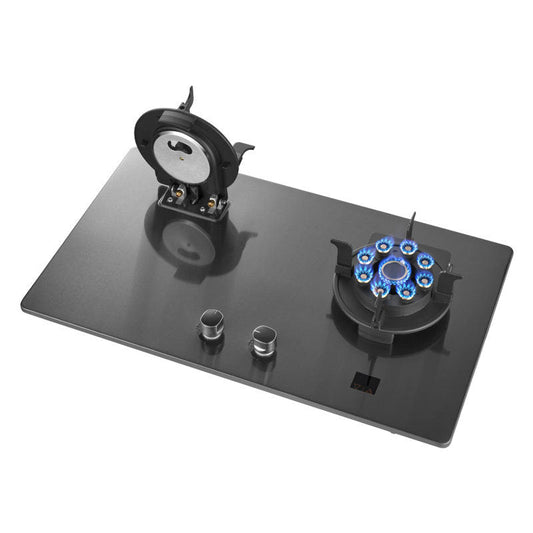
Collection: Household Gas Stove | Home Kitchen Gas Cooker with Flame Failure Safety

About Household Gas Stove | Home Kitchen Gas Cooker with Flame Failure Safety

A household gas stove is the main cooking appliance in home kitchens, running on natural gas or LPG. Two to four burners deliver heat for stir-frying, boiling and simmering, with electronic pulse ignition for quick starting. Modern stoves include thermocouple flame failure protection that shuts off gas if a flame goes out, plus tempered glass or stainless steel panels for easy cleaning. Buyers consider burner power, energy efficiency, panel material and safety features.

How to Choose

  • Burner count and heat output — match to family size and cooking style
  • Gas type — natural gas or LPG nozzle compatibility with your supply
  • Flame failure protection — thermocouple or ion-sensing cut-off for safety
  • Panel material — tempered glass for easy cleaning or stainless steel for durability
  • Ignition and controls — electronic pulse ignition and child safety features

FAQ

Q: What burner power do I need for home cooking?
A: Around 3.8 to 4.5 kW per burner handles daily cooking, while 4.5 kW or higher supports strong stir-frying. A small simmer burner helps with slow cooking.

Q: What is flame failure protection?
A: A thermocouple or ion sensor detects when a flame goes out and cuts off the gas supply automatically, preventing leakage in the home.

Q: How do I choose between tempered glass and stainless steel panels?
A: Tempered glass is easy to wipe clean, while stainless steel resists impact and heat. Both are standard; check for reinforced, sealed edges on glass models.

Q: Can the stove be converted between natural gas and LPG?
A: Most models can be converted by changing nozzles and adjusting the regulator. Have the conversion done by a qualified technician and confirm the gas type with the supplier.