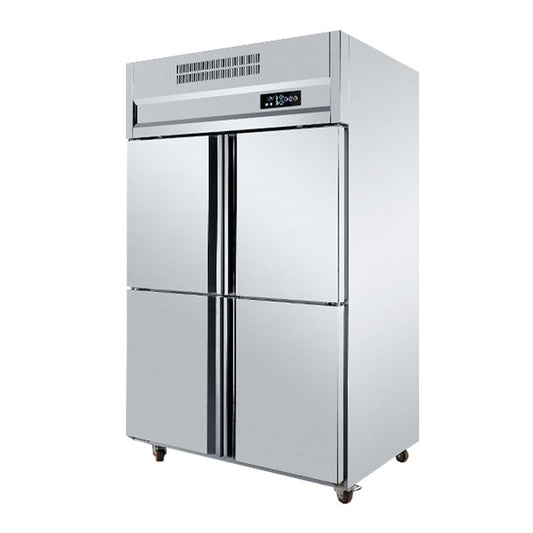
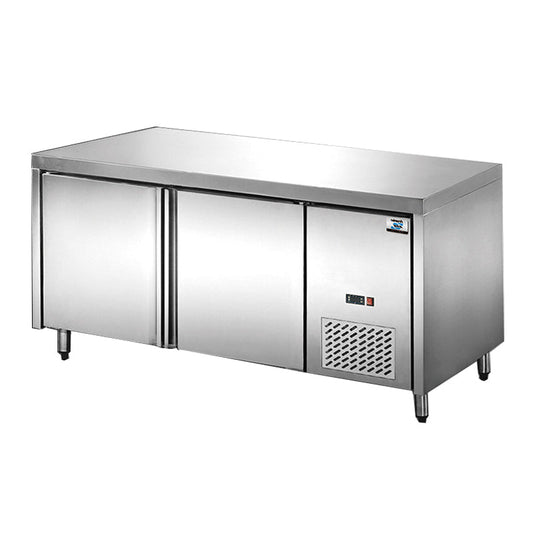
Collection: Commercial Refrigerator & Display Chiller
About Commercial Refrigerator & Display Chiller
Commercial refrigerators and display chillers are built for retail and food service use, keeping chilled and frozen products at safe temperatures while presenting them to customers. Glass-door upright units suit bottled drinks, dairy and packaged goods, while open multi-deck chillers make stock easy to grab in supermarkets. Direct cooling and fan-assisted cooling are the two main systems, each with different moisture retention and temperature uniformity. Energy efficiency, refrigerant type and serviceability are key long-term costs.
How to Choose
- Cooling type: direct cooling vs fan-assisted air circulation
- Capacity and internal volume matched to your daily stock
- Display format: glass-door, open multi-deck or counter unit
- Energy efficiency and refrigerant used in your climate
- Temperature range and precise control for your product category
FAQ
Q: What temperature range do display chillers hold?
A: Chilled display units typically hold around 2-8 degrees Celsius depending on product category, while freezer display units hold below -18 degrees Celsius. Match the unit's temperature class to the products you sell.
Q: Glass-door or open multi-deck, which should I choose?
A: Glass-door units are more energy efficient and suit drinks, dairy and packaged goods. Open multi-deck units display more stock and encourage impulse buys but cost more to run because cold air escapes.
Q: What is the difference between direct cooling and fan cooling?
A: Direct cooling is more energy efficient and retains moisture but cools less uniformly and needs manual defrosting. Fan-assisted cooling circulates air evenly for stable temperatures but can dry out products over time.
Q: How can I reduce running costs?
A: Choose an energy-efficient unit with a high-efficiency compressor, LED lighting and good insulation, and consider a refrigerant with lower environmental impact. Ask the supplier for the daily energy consumption figure.